Including foods rich in vital nutrients in the diet of children is a must. Such nutrients aid in their healthy growth and development. Read on to learn more about the top 5 nutrients needed for the healthy growth and development of children.A complete plate of food for kids should have all the essential nutrients he or she needs for growth and development. You do not need to panic every time you offer your kids their regular meals – it is not really complicated, as you may think. It is just that you need to have a basic knowledge of what food contains which type of nutrients and a little preparation for your growing kids. Listed below are the top 5 nutrients essential for healthy growth of your child.
Protein is the main nutrient that involves in building body cells of your kids. Protein is also responsible for preparing antibodies to help your kids fight infections, making haemoglobin that helps carrying oxygen in different parts of your kids’ bodies, and in breaking down food into energy components. It is popularly known that major sources of protein are meat and dairy, but beware, because animal protein has proved to have detrimental effects on human body. It is better to opt for plant-based protein, such as soy, tofu, beans, mushrooms, pulses, and plenty of nuts.
2. Carbohydrates
Carbohydrate is body’s primary source of energy. They provide energy to your kids while the protein and fat are busy in building new cells and repairing tissues in their body. There are simple carbohydrates (sugars) and complex carbohydrates (fibers and starches). The best form is fiber as it helps to keep your kids’ bodies clean and keep them running by inducing bowel regularity.The best sources of fiber are whole-grains, seeds, kidney beans, nuts, lentils, etc. Other forms of complex carbohydrates are multigrain breads, brown rice, pastas, etc. while simple forms are white rice, refined flour, etc. It is better to rely on complex sources of carbohydrate than on simple forms to meet the requirement of carbohydrates in children.
3. Fats
Fat is the major source of energy; it helps in transporting fat-soluble vitamins; it acts as a protective layer to different organs of the body. Fats are not always bad - there are good fats and bad fats. Give your kids the good fats that are available as essential fatty acids, which help in building cells, strengthening the heart, build immunity, and absorb nutrients in your kids’ bodies. They are abundant in flaxseeds, almonds, walnuts, whole grain foods, dark green leafy veggies like spinach and broccoli, olive oil, soybean oil, etc.
4. Minerals
Calcium is an important mineral in your growing kid’s body as it strengthens their bones. Do not worry as animal protein is not really recommended for your kids; you can still give them plenty of calcium in the form of tofu, non-dairy milk, kale, collard greens, blackstrap molasses, dried fruits, sesame seeds, etc. Iron is important in making the oxygen-carrier, hemoglobin, and is present in legumes, dark green leafy vegetables, fortified bread and grains, and dried fruit.Magnesium, important for your kids’ strong bones and steady heart rhythm, is available in nuts, legumes, and green leafy veggies. Potassium, helpful in maintaining healthy blood pressure in kids, is available in fresh fruits and vegetables. Zinc has good roles in metabolism and digestion in kids, and is abundant in beans and dry fruits.
5. Vitamins
For good vision and bone growth, your kids need vitamin A. The best sources of vitamin A are colourful fruits and veggies, such as carrots, sweet potatoes, kale, spinach, mango, etc. Other brightly coloured fruits and vegetables, such as oranges, red bell peppers, broccoli, papaya, kiwi, etc. contain vitamin C, which are helpful in repairing bones, blood cells, and tissues. Your kids can get vitamin E, which boosts immunity, from vegetables, fruits, nuts, and seeds.Most of the kids need almost the same type of nutrients for healthy growth and development. But the major difference depends on their ages. For detailed idea of amount of daily intake of the above nutrients, it is better to consult your family doctor or dietician, who can give you a detailed idea of amount of nutrients your kids need based on their age and appetite.Which nutrients are essential for healthy growth of children? What are the risks associated with lack of right nutrients in the diet of children? How to ensure that kids have a balanced diet regularly? Discuss here.
Sorry. Due to our site's regulations and policies, your message has not been posted. Our moderating team has been notified about your message. If the message is found to be genuine and still did not get posted, you may not post the message again as it will automatically get posted for you within 24hrs time (excluding weekends).
- The Indiaparenting Team












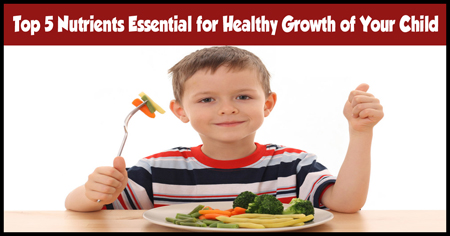 Including foods rich in vital nutrients in the diet of children is a must. Such nutrients aid in their healthy growth and development. Read on to learn more about the top 5 nutrients needed for the healthy growth and development of children.A complete plate of food for kids should have all the essential nutrients he or she needs for growth and development. You do not need to panic every time you offer your kids their regular meals – it is not really complicated, as you may think. It is just that you need to have a basic knowledge of what food contains which type of nutrients and a little preparation for your growing kids. Listed below are the